


![Czym jest konfigurator produktu? Praktyczny przewodnik dla e-commerce [2025]](https://i-compose.it/wp-content/uploads/2025/02/konfiguracja-online-1110x710-c-default.png)
What is a product configurator and what will you learn from this article?
A product configurator is a solution that allows users to independently create and personalize products online. These tools are commonly seen in e-commerce stores that offer customers product customization. Both online and in physical retail environments, configurators open up new sales opportunities for businesses.
Online customers are becoming increasingly demanding. They expect personalized shopping experiences, realistic product previews, and the ability to customize the product itself.
In this practical guide, we’ll show the capabilities and features of a configurator. You’ll also learn what problems it solves in e-commerce and what benefits and business value it provides. We’ll also explore industries where a product configurator works especially well. Using selected examples, we’ll highlight its key functions. You’ll also find a breakdown of the implementation process and tips on how to analyze configurator-generated data.
What problems does a product configurator solve in e-commerce?
In today’s digital commerce, personalization and customer experience have become essential to business success. Especially since the pandemic, digitalization has become widespread—and necessary. Many businesses have begun implementing and developing personalization, which has contributed to growth and customer loyalty.
👉 According to Deloitte Digital, there are 50% more companies today than two years ago that consider personalization a key part of their customer service strategy.
Product personalization, as a broader part of personalized customer experience, brings powerful opportunities for businesses and consumers alike. After all, who doesn’t want to personalize the product they’re about to purchase?
1. High number of inquiries about product visualizations
A configurator provides real-time previews of all changes made. This eliminates the need for customers to constantly contact support for visualizations. Those who want to see a personalized version of the product before buying it (and many do, according to inquiries we receive) can preview it in 3D – with 360-degree rotation – or 2D – showing the product from the front or multiple angles. All these visual assets can also be used in marketing to promote personalized options.
2. High volume of questions or calls about custom products
A wide product offering within the configurator enables customers to build and visualize their own product independently. This automated process allows exploration of different variants without needing support from sales staff.
3. Customers lack technical knowledge for choosing the right product
The system can guide users to valid configurations and verify their feasibility. The configurator works as a virtual assistant, helping users understand which combinations are possible. Descriptions, tooltips, and smart dependencies ensure customers are guided toward technically correct and available variants.
4. Prices depend on configuration and can’t be shown upfront
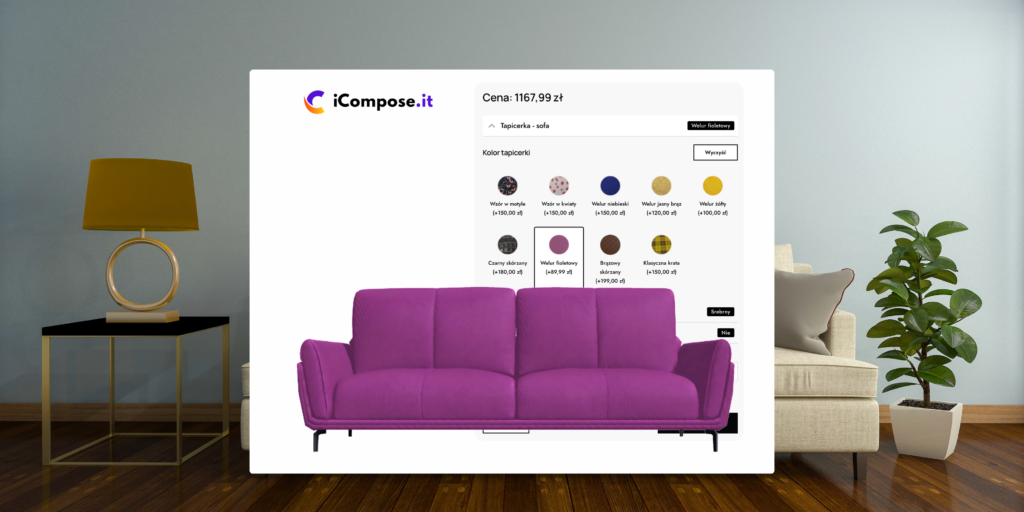
A configurator solves this by dynamically calculating the price. Every change in configuration updates the total in real-time, considering factors like materials, additional features, and more.
5. Lack of engaging shopping experiences
When customers are passive observers, they may quickly abandon the site. But when they actively participate in creating their product, engagement and satisfaction rise. Shoppers are more likely to buy from stores that offer something extra—like an interactive, personalized experience.
Who is a product configurator for?
Introducing a product configurator can solve many of the problems mentioned above and benefit both the company (across support, sales, and production) and its customers 🚀
✅ For online stores
✅ For manufacturing companies
✅ For sales and marketing teams
✅ For operations and production teams
A configurator helps build stronger customer relationships by delivering exactly what they need.
What benefits does a product configurator offer your e-commerce business and its users?
Implementing a configurator—whether 2D or 3D—can offer much more than just a new tool. It can transform your entire sales experience.
1. Engage users and boost sales
Customers who spend time customizing a product are more likely to buy it—and pay more for it. This increases average order value and drives revenue. This behavior is explained by the IKEA Effect, where people place more value on items they helped create.
2. Eliminate errors in personalized orders
Thanks to built-in logic and constraints, customers can only create valid configurations—those that your business can actually produce.
3. Reduce time spent preparing quotes
A built-in pricing calculator eliminates the need for manual quotes. Staff no longer have to prepare offers for every request.
4. Fewer returns
Seeing the product in a visualized, customized form builds buyer confidence and reduces returns of personalized items.
5. Give users what they need—product visualization
Visualization encourages experimentation, makes comparisons easier, boosts creativity, and shows every product change in real time. Configurators can offer both 2D and 3D previews.
6. Showcase and differentiate your personalized product offering
Not all users know your products can be customized. A configurator highlights this and allows customers to build unique products rather than browsing dozens of similar options.
7. Choose an intuitive 3D product configurator for your business
Configurators are user-friendly for both shoppers and internal teams. Their flexible architecture allows for feature expansion and integration with other business systems.
Why are companies adopting product configurators?
✅ To highlight their custom product capabilities
✅ To cater to customers seeking tailored products
✅ To offer choice and meet expectations
✅ To deliver memorable shopping experiences
✅ To present diverse product options via customizable variants
✅ To optimize sales and procurement processes
Product configurators in 2025
In 2025, product configurators are dynamic, tech-powered systems integrated with sales platforms and customer experiences.
Modern configurators now combine AI, AR, and 3D with platforms like WooCommerce, PrestaShop, Magento, and more. Customers can visualize in real time, compare, save, and share configurations. Many solutions are delivered as SaaS or subscription-based models, with growing interest due to evolving consumer needs.
3D and AR are increasingly important. According to Snap, 93% of Gen Z consumers want AR-powered experiences. AR allows users to “place” a sofa in their living room or preview a branded roll-up in-store. AI analyzes preferences and assists users in creating aesthetically pleasing designs. 3D makes product previews more realistic and immersive.
These technologies also enhance marketing. With video formats and storytelling trends, brands can showcase the configurator and its products. User-generated content is growing: videos showing custom interiors or personalized gifts drive engagement. It’s more than marketing—it’s relationship-building.
If the configurator is well-designed, fast, and visually appealing, users will enjoy it—and likely share it. This organic promotion can drive long-term sales growth.
In 2025, a configurator should be part of your digital strategy.
M-commerce and configurators: the mobile future of shopping?
More purchases are made via smartphones than ever before. Mobile commerce growth means configurators must be intuitive and functional on small screens.
Businesses that don’t invest in mobile-friendly personalization risk losing customers to competitors offering better user experiences.
According to Strategy&, by 2028 over 50% of e-commerce revenue in Poland will come from mobile. This demands configurators that work seamlessly on phones and tablets, allowing users to customize products anytime, anywhere.
As e-commerce, user expectations, and technology evolve, configurators are becoming a strategic must-have. The report “Polish e-commerce market 2024–2028” points out that rising competition pushes businesses to invest in UX/UI and AI.
Wherever personalization is offered, better customer experiences are key to staying competitive.
Can a configurator help you understand your customers?
Yes. By analyzing customer-created projects, you can better understand preferences and trends. This reveals the most popular components, features, and combinations. Configurator data also supports cross-selling, offer optimization, and improved user experiences.
In which industries do product configurators work best?
Anywhere product personalization is offered. Here are a few examples and functions that configurators can support:
🔹 Computing
-
Server configurator: choose server, drives, software, warranty, etc.
-
PC configurator: select CPU, GPU, case, RAM, accessories
🔹 Packaging
-
Cardboard box configurator (size, quantity, printing, stickers)
-
Food or catering packaging configurator (dimensions, markings, etc.)
🔹 Cycling
-
Bike configurators for electric, city, and mountain bikes
-
Customizable scooters and skateboards
🔹 Furniture and carpentry
-
Furniture configurators (size, material, color, handles, legs, etc.)
-
Window and door configurators
-
Works for both ready-made sets and made-to-order pieces
🔹 Real estate & construction
-
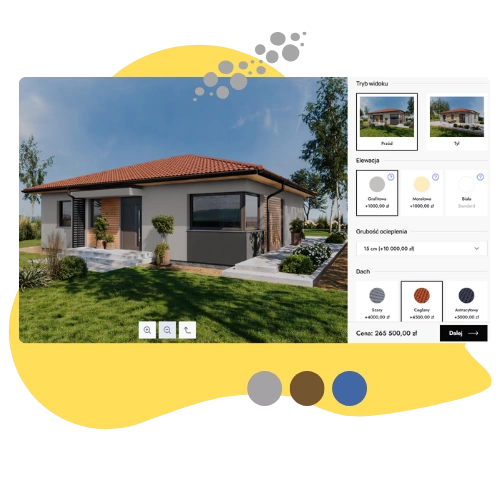
House project configurators
-
Modular home configurators
-
Outdoor structures (garages, pergolas, guardhouses)
-
Useful for preliminary cost estimates and customization
🔹 Lighting
-
Custom lighting (color temperature, power, shapes, mounting options)
🔹 Gifts and promotional products
-
Logo gadget configurator
-
Gift set configurator (box, contents, branding, graphics)
-
Promotional clothing configurator
Additional key functions:
-
Price calculator
-
Real-time visualization
-
Save project history
-
Edit and reconfigure saved products
-
Buy or send an offer request
-
Project summary
-
Admin panel for business insights
Configurators help brands stand out and increase sales by offering unique, personalized experiences. 🚀
What are the stages of configurator development and implementation?
1. Needs analysis and choosing the right solution
Every company is different, so the first step is to define product features, dependencies, and user expectations. At iCompose.it, this includes client workshops, specs, and mockups before development begins.
2. Technology selection and coding
Based on complexity and budget, we choose tech stacks like React.js, Nest.js, TypeScript, PostgreSQL, etc., for modern and scalable solutions.
3. System integrations
Avoid manual data handling by integrating the configurator with e-commerce, ERP, or shipping platforms. We’ve connected with Fakturownia, WooCommerce, DPD, Shopify, PrestaShop.
4. Testing and deployment
We run usability and performance tests on all devices. Continuous improvements ensure that the configurator is smooth, intuitive, and fast. Simple projects can take ~2 months, complex 3D-based configurators may require several.
What happens after launch?
Deployment doesn’t mean the end. You can request further development or maintenance—adding new products, updating the system, creating new admin accounts, etc.
Ongoing growth often involves adding new features or expanding based on evolving business needs.
Hire our experienced team and let us build your dedicated product configurator!
Many companies already benefit from product personalization—a key value for today’s consumers. Those who partner with IT providers like iCompose.it to build end-customer-focused configurators gain not only a new sales channel but also a powerful tool for customer engagement and brand differentiation.
Engage your users by offering a higher level of online shopping experience with a custom configurator.
With iCompose.it, you can start by consulting your idea with a specialist. We’ll introduce you to our projects, technology, and development process. We believe good cooperation is built on communication—and that’s what we value.
You’ll work with a team that has implemented configurators for clients in various industries. We offer ready-made solutions and dedicated product configurators tailored to your business needs.
At iCompose.it, we connect ideas with technology!