Implementation Objective
Lena Lighting, a producer of modern lighting systems, approached us to build an online configurator that would allow users to design lighting solutions in just a few steps. The primary goal was to marry robust technical functionality with a friendly user experience.
Project Approach
A detailed analysis of the client’s needs allowed us to precisely plan the configurator’s features and development workflow. One of our top priorities was the interface’s aesthetics—so we opted for a clear, bright design that aligns seamlessly with Lena Lighting’s visual identity.
We devoted considerable effort to fully understanding and implementing the configurator’s component‑matching logic. During development, we also introduced an automatic collision‑detection system that eliminates invalid combinations at the configuration stage. This ensures users receive a fully coherent, buildable design every time. Moreover, the technologies we employed—React.js, PostgreSQL, Nest.js, and others—guaranteed high performance and operational clarity.
The finished configurator enables, among other things, creating personalized designs, saving and sharing projects, and submitting quotation requests directly to Lena Lighting’s sales team. Users can also view real‑time pricing for selected products, helping them choose the best fixtures for their needs.
It’s also worth noting that the linear‑lighting configurator was enhanced with a translation system. Thanks to the language‑management module developed by our team, the client can independently make updates and manage content across five language versions.
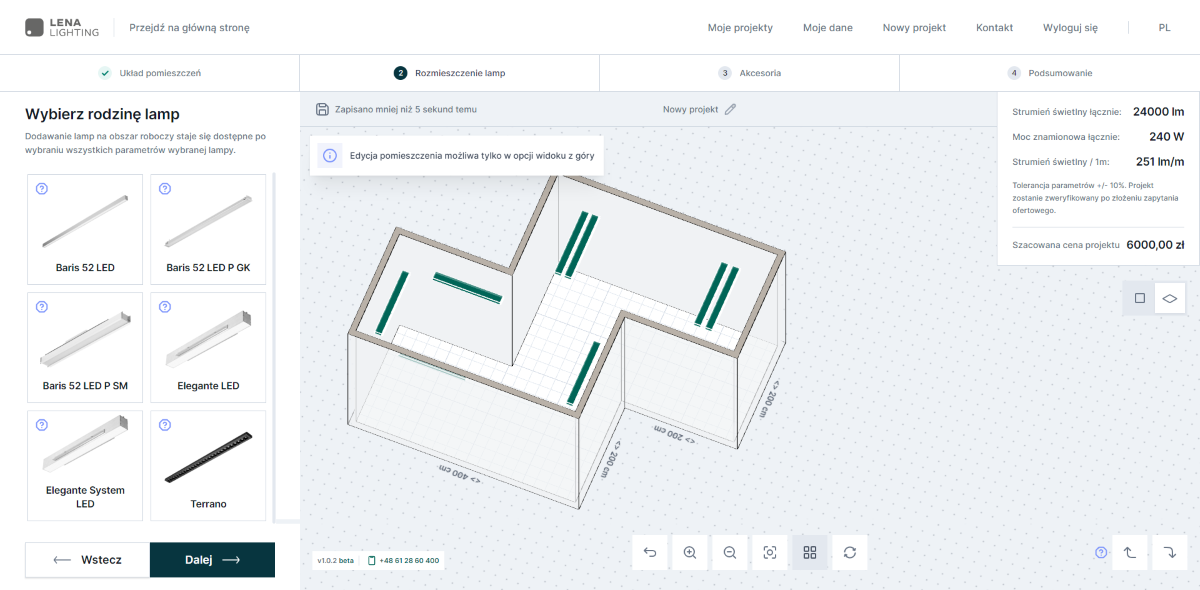
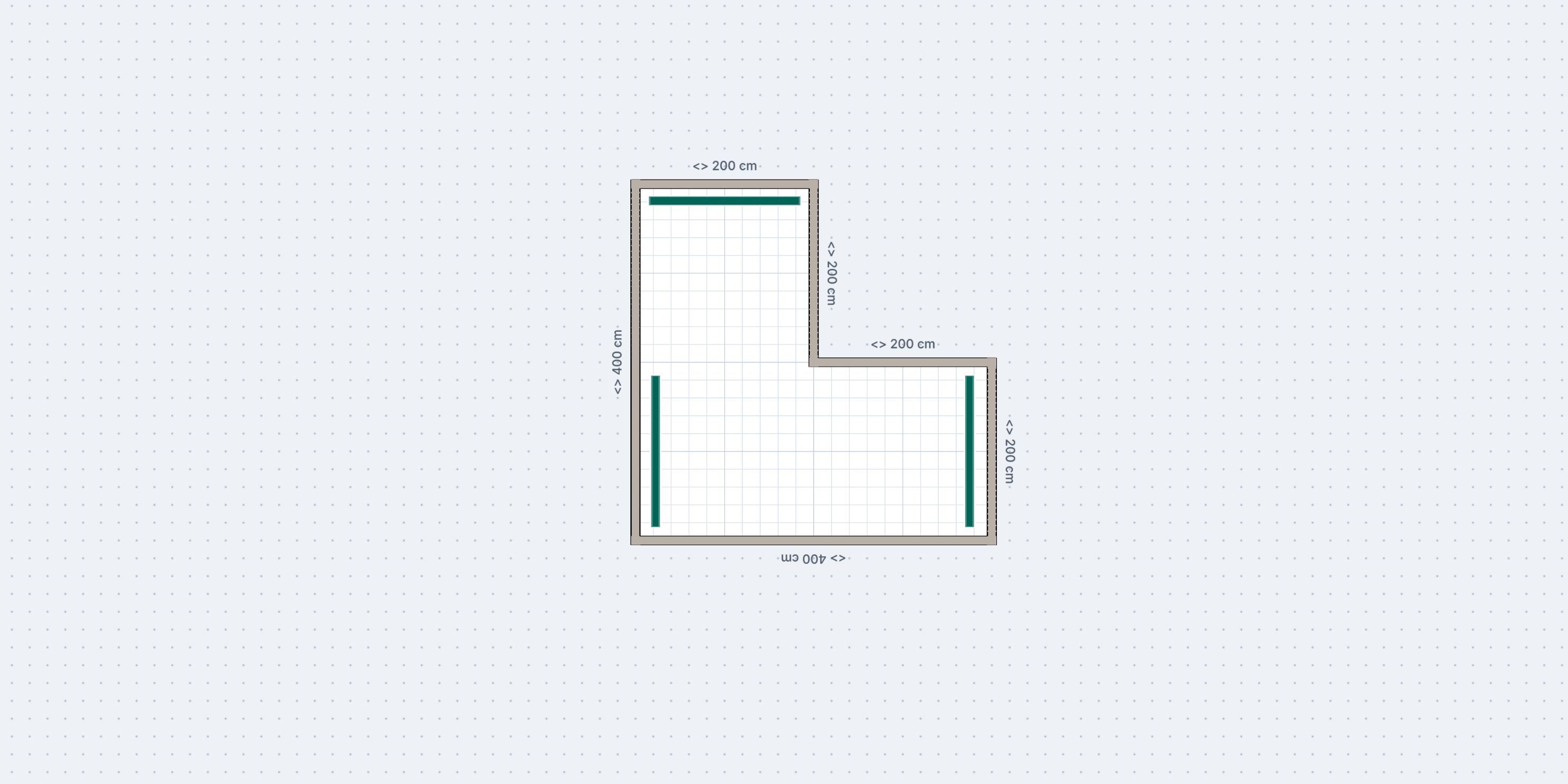
The lighting planner begins by letting you choose the outline of your room, which you can then freely scale and assign mounting parameters to. At any time, you can switch between a bird’s-eye plan view and an isometric, almost 3D-style view—this dual perspective makes it easy to work with the space, maintain full control over the result, and watch your design evolve in real time.
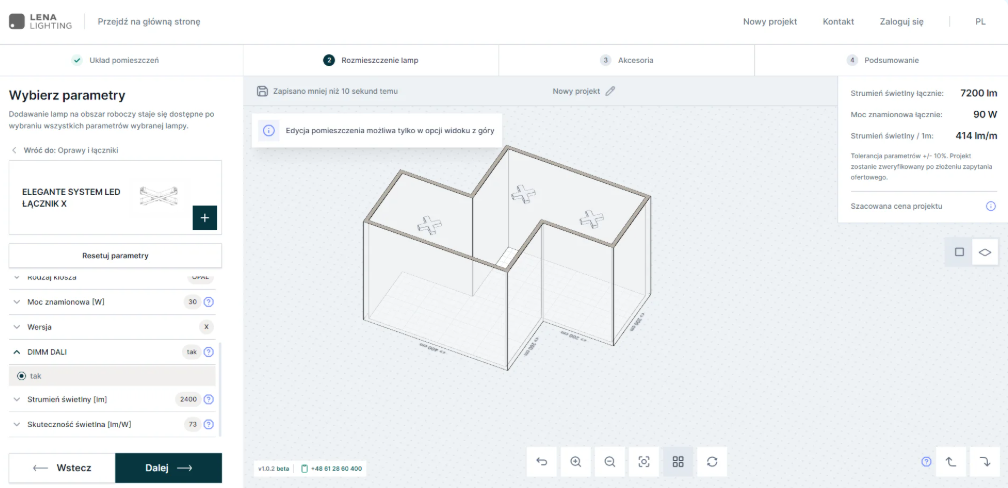
Once the room is set up, you select fixtures, specify their technical parameters and any needed accessories to ensure a correct configuration. As you make your choices, the products appear directly within the room model, and you simply drag each lamp to its desired mounting location. When you’re done, you can preview the final layout, save it for later, adjust the viewing angle or export the design for quoting or sharing—everything you need to turn your concept into a buildable project.
Summary
The tool we created functions like a spatial planner, enabling intuitive, tailored room‑lighting design while simultaneously opening up a whole new level of brand interaction for users—including designers and architects.








 Czytaj więcej...